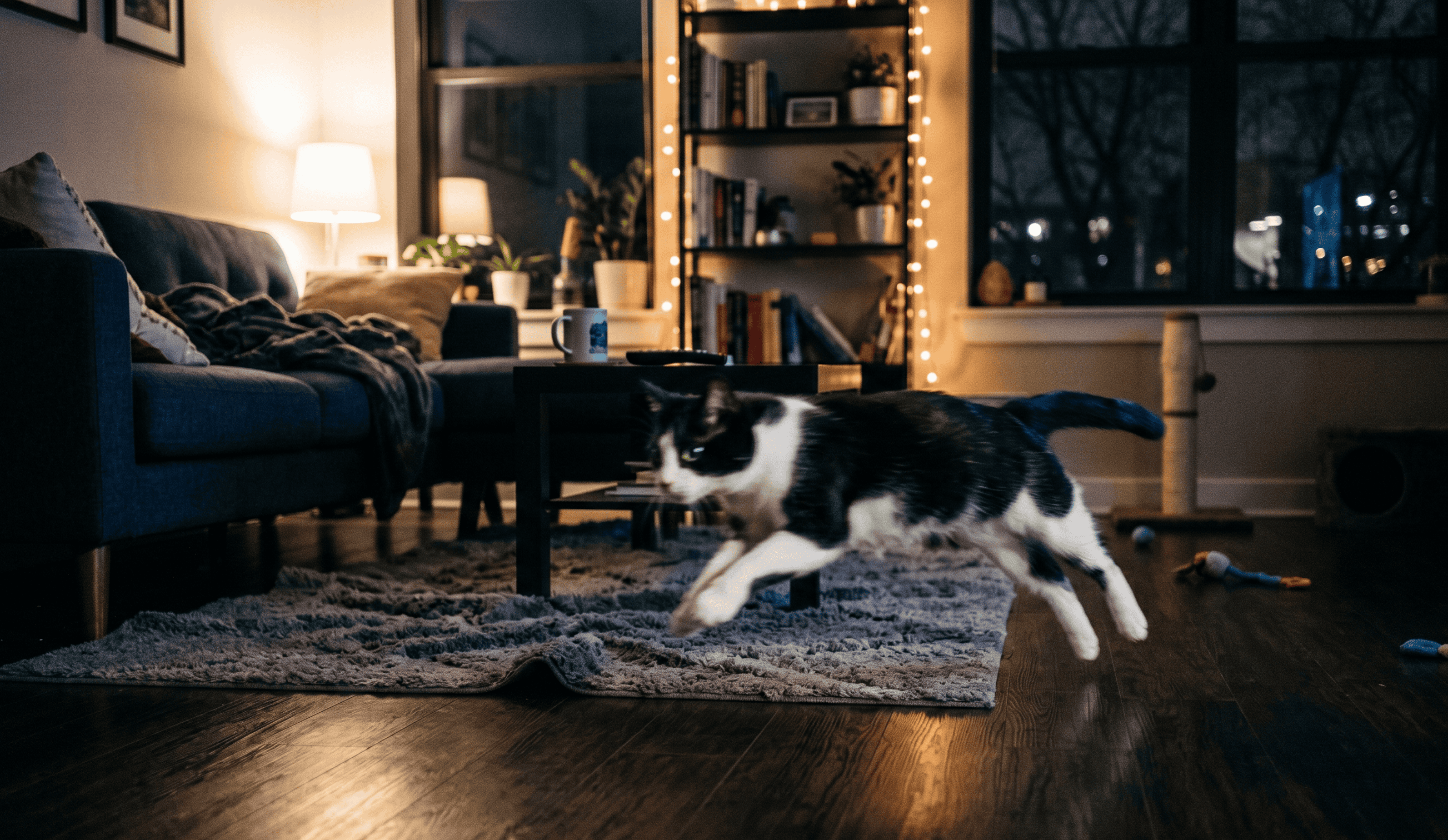
If your cat run crazy searches brought you here, the likely answer is nighttime zoomies caused by instinct, extra energy, boredom, or a routine that needs adjusting. In a small apartment, a cat can run crazy at night because there are fewer chances to climb, hunt, explore, and burn energy during the day.

Before assuming something is wrong, look at your cat’s daily rhythm, play schedule, food timing, and apartment setup. Our cat enrichment guide and apartment cat territory mapper can help you create more activity zones. For health warning signs, compare your observations with the ASPCA cat care guide and call your veterinarian if the behavior is sudden or severe.
Why does my cat run crazy at night?
A cat run crazy episode is usually normal when it lasts a few minutes and your cat returns to calm behavior afterward. However, frequent nighttime racing can mean your apartment cat needs more hunting-style play, a better feeding routine, or more vertical territory before bedtime.
Does your cat suddenly sprint across the apartment at 2 AM, bounce off furniture, and act completely wild at night? These sudden bursts of energy — often called cat zoomies — are extremely common in indoor cats, especially in small apartments.
If you’re wondering why your indoor cat runs around like crazy at night, the answer usually comes down to energy, instinct, boredom, or overstimulation. Apartment cats often have fewer opportunities to climb, hunt, explore, and burn energy during the day, which can lead to nighttime hyperactivity.
In this guide, you’ll learn the 7 most common reasons cats get zoomies at night, how apartment living affects feline behavior, and practical ways to calm your cat before bedtime.
What are cat zoomies when your cat run crazy?
“Zoomies” are sudden bursts of frantic energy where cats sprint, jump, race through hallways, and sometimes attack invisible enemies. Veterinarians often call these episodes FRAPs — Frenetic Random Activity Periods.
For indoor cats, especially those living in apartments, zoomies are usually completely normal. Cats are naturally crepuscular animals, meaning they’re most active during dawn and dusk. Unfortunately for apartment owners, that often translates into late-night chaos.
If your cat also seems restless, clingy, or bored indoors, you may also want to read Why Your Indoor Cat Gets Bored in Apartments and our complete Cat Enrichment Guide.
1. Your Indoor Cat Has Too Much Pent-Up Energy
One of the biggest causes of cat crazy at night small apartment behavior is simple: your cat hasn’t burned enough energy during the day.
In the wild, cats spend hours hunting, stalking, climbing, and exploring territory. Apartment cats, however, often spend long stretches sleeping near windows or lounging on furniture with limited stimulation.
By nighttime, all that unused energy explodes into:
- Hallway sprints
- Furniture jumping
- Wall climbing
- Random meowing
- Play aggression
If your cat constantly seems restless indoors, check out How to Keep Indoor Cats Entertained for apartment-friendly enrichment ideas.
Why Apartments Make This Worse
Small apartments limit:
- Running space
- Climbing opportunities
- Exploration
- Hunting simulation
- Environmental enrichment
Without enough physical and mental activity, your cat creates its own entertainment at 2 AM.
How to Fix It
Try increasing interactive play sessions before bedtime:
- Wand toys
- Laser pointer games
- Puzzle feeders
- Treat hunts
- Cat tunnels
Aim for at least 15–20 minutes of intense play at night.

2. Your Cat’s Natural Hunting Instincts Activate at Night
If you’re wondering why cats get zoomies indoors, biology plays a major role.
Cats evolved as hunters that are most active during twilight hours. Even fully domesticated indoor cats still carry strong instincts to stalk and chase prey at night.
That means your apartment becomes their nighttime hunting ground.
Your cat may:
- Sprint from room to room
- Hide behind furniture
- Ambush your feet
- Chase shadows
- Attack toys aggressively
This behavior isn’t bad — it’s instinctive.
Apartment Cats Need “Mock Hunting”
Indoor cats don’t get natural hunting outlets, so you need to recreate them artificially.
A good nightly routine includes:
- Stalking play
- Chasing play
- “Catching” the toy
- Eating a small meal afterward
This mimics the natural hunt-eat-sleep cycle and helps reduce nighttime hyperactivity.
3. Small Apartments Can Cause Cat Boredom
Many apartment cats become hyper because their environment lacks variety.
A small apartment can unintentionally create sensory boredom.
Signs of understimulation include:
- Excessive zoomies
- Constant meowing
- Scratching furniture
- Overgrooming
- Attention-seeking behavior
- Nighttime chaos

Boredom is one of the biggest causes of nighttime zoomies. You can also read Why Your Indoor Cat Gets Bored in Apartments to better understand common indoor behavior problems.
Common Apartment Problems for Cats
Limited Vertical Space
Cats naturally love climbing and surveying territory.
Few Hiding Spots
Cats need secure spaces to feel mentally satisfied.
Lack of Window Entertainment
Watching birds, people, and outdoor movement provides mental enrichment.
Apartment Enrichment Ideas
To improve apartment cat nighttime behavior, add:
- Cat trees
- Window perches
- Wall shelves
- Interactive toys
- Puzzle feeders
- Rotating toy collections
- Cardboard forts
Even small upgrades can dramatically reduce nighttime energy bursts.
4. Your Cat Sleeps Too Much During the Day
Indoor cats often adapt to their owner’s work schedule by sleeping all day. Then when you finally want to sleep, your cat is fully rested and ready for action.
This creates the classic cycle:
- Cat naps all afternoon
- Human goes to bed
- Cat starts sprinting

How to Reset the Schedule
You can gradually shift your cat’s energy patterns by:
- Scheduling play sessions in the evening
- Feeding dinner later at night
- Encouraging daytime interaction
- Preventing excessive afternoon sleeping
Try engaging your cat more after work instead of only right before bed.
5. Your Cat May Be Seeking Attention
Sometimes hyper cat at night indoors behavior is accidentally reinforced by owners.
Here’s how it happens:
- Cat runs around at night
- Owner reacts immediately
- Cat receives attention
- Behavior repeats nightly
Even negative attention can reward cats.
If your cat learns that nighttime zoomies lead to:
- Talking
- Feeding
- Playing
- Chasing
- Petting
they may intentionally repeat the behavior.
Many apartment cats become extra attached to their owners in small living spaces. You may also notice behaviors explained in Why Your Cat Follows You Everywhere in a Small Apartment.
What To Do Instead
Avoid dramatic reactions during nighttime episodes.
Instead:
- Reward calm nighttime behavior
- Maintain a consistent schedule
- Increase daytime stimulation
- Ignore attention-seeking zoomies when possible
Consistency matters more than punishment.
6. Stress or Anxiety Can Trigger Nighttime Zoomies
Not all zoomies are purely playful. Some cats release stress through frantic movement.
Apartment environments can sometimes increase stress because of:
- Loud neighbors
- Limited territory
- Lack of escape spaces
- New pets
- Frequent visitors
- Outdoor noises
Cats often release built-up tension late at night when the environment becomes quieter.
Some cats also become fixated on unusual apartment noises or movement. If your cat constantly watches empty corners or walls, read Why Does My Cat Stare at Walls in My Apartment?.
Signs Stress May Be Involved
Look for:
- Hiding frequently
- Tail puffing
- Aggressive behavior
- Excessive vocalization
- Sudden sensitivity
- Litter box issues
Ways to Reduce Apartment Stress
Try creating calming zones with:
- Elevated resting areas
- Covered beds
- Quiet hiding spots
- Predictable routines
- White noise machines
- Pheromone diffusers
A calmer environment often reduces nighttime hyperactivity.
7. Your Cat Might Simply Be Young
Kittens and young cats naturally have enormous energy reserves.
If your cat is under 2 years old, nighttime zoomies are extremely common.
Young indoor cats often experience:
- Explosive play sessions
- Random sprinting
- Furniture climbing
- Midnight attacks on objects
- Constant curiosity
This behavior usually improves with maturity, especially when paired with proper enrichment.

Best Strategy for Young Apartment Cats
For energetic young cats:
- Increase climbing opportunities
- Schedule multiple play sessions daily
- Rotate toys often
- Use food puzzles
- Create exploration zones
Young cats need both physical and mental exercise.
How To Stop Cat Zoomies at Night in Apartments
If your indoor cat is running around at night, here are the most effective solutions:
Create a Nighttime Routine
Cats thrive on predictable schedules.
A strong nighttime routine might look like:
- Interactive play
- Feeding
- Quiet bonding time
- Lights dimmed
- Consistent bedtime
Routine helps signal that nighttime is for resting.
Increase Vertical Territory
In small apartments, vertical space is crucial.
Add:
- Tall cat trees
- Floating shelves
- Window hammocks
- Multi-level furniture access
Vertical territory reduces boredom and boosts confidence.

Use Food Puzzles Before Bed
Food puzzles mentally exhaust cats and simulate hunting behavior.
Great options include:
- Treat balls
- Puzzle trays
- Snuffle mats
- Slow feeders
Mental stimulation often tires cats faster than physical activity alone.
Rotate Toys Weekly
Cats become bored with constant access to the same toys.
Instead:
- Store half the toys away
- Rotate weekly
- Reintroduce “forgotten” toys later
This keeps the apartment environment exciting.
Avoid Punishing Zoomies
Punishment usually increases stress and confusion.
Never:
- Yell
- Spray water
- Chase your cat
- Physically restrain them
Instead, redirect energy into healthy play and enrichment.
When Nighttime Cat Behavior Could Be Medical
Most nighttime zoomies are normal. However, sudden changes in behavior can sometimes indicate medical issues.
Talk to a veterinarian if your cat suddenly develops:
- Extreme nighttime hyperactivity
- Excessive vocalization
- Aggression
- Weight loss
- Disorientation
- Restlessness in older age
Conditions like hyperthyroidism, pain, or cognitive dysfunction can affect nighttime behavior.
Helpful Apartment Cat Resources
Want to better understand your cat’s nighttime behavior and energy levels? Try these interactive tools:
- Decode Your Cat Behavior Quiz
- Find the Best Toy for Your Apartment Cat
- Cat Enrichment Simulation Game
- Complete Cat Enrichment Guide
Final Thoughts
Living with an energetic cat in a small apartment can definitely be challenging, especially when midnight zoomies interrupt your sleep. But in most cases, cat zoomies at night in apartment living are completely normal and manageable.
The key is understanding that indoor cats still carry powerful instincts to hunt, explore, climb, and play. When those needs aren’t fully met during the day, the energy often explodes at night.
By improving enrichment, increasing playtime, and creating a better nighttime routine, you can significantly reduce apartment cat nighttime behavior problems and help your cat feel calmer, happier, and more fulfilled indoors.
Every cat has different energy levels, routines, and environmental needs. What works for one apartment cat may not work for another, so gradual experimentation with enrichment and routine changes is often the best approach.
If your hyper cat at night indoors behavior continues despite enrichment changes, consider consulting a veterinarian or feline behavior specialist for additional guidance.
Frequently Asked Questions About Cat Zoomies at Night
Why does my cat run around the apartment at night?
Most cats run around at night because of pent-up energy, hunting instincts, boredom, or overstimulation. Indoor apartment cats often lack enough daytime enrichment, which leads to nighttime zoomies.
Are cat zoomies at night normal?
Yes. Cat zoomies are extremely common and are usually a normal release of energy. Cats are naturally most active during dawn and dusk.
How do I calm my indoor cat at night?
Interactive play before bedtime, puzzle feeders, climbing spaces, and a consistent nighttime routine can significantly reduce nighttime hyperactivity.
Do apartment cats get zoomies more often?
Apartment cats may experience zoomies more intensely because smaller spaces often provide less stimulation, exercise, and environmental enrichment.


Leave a Reply