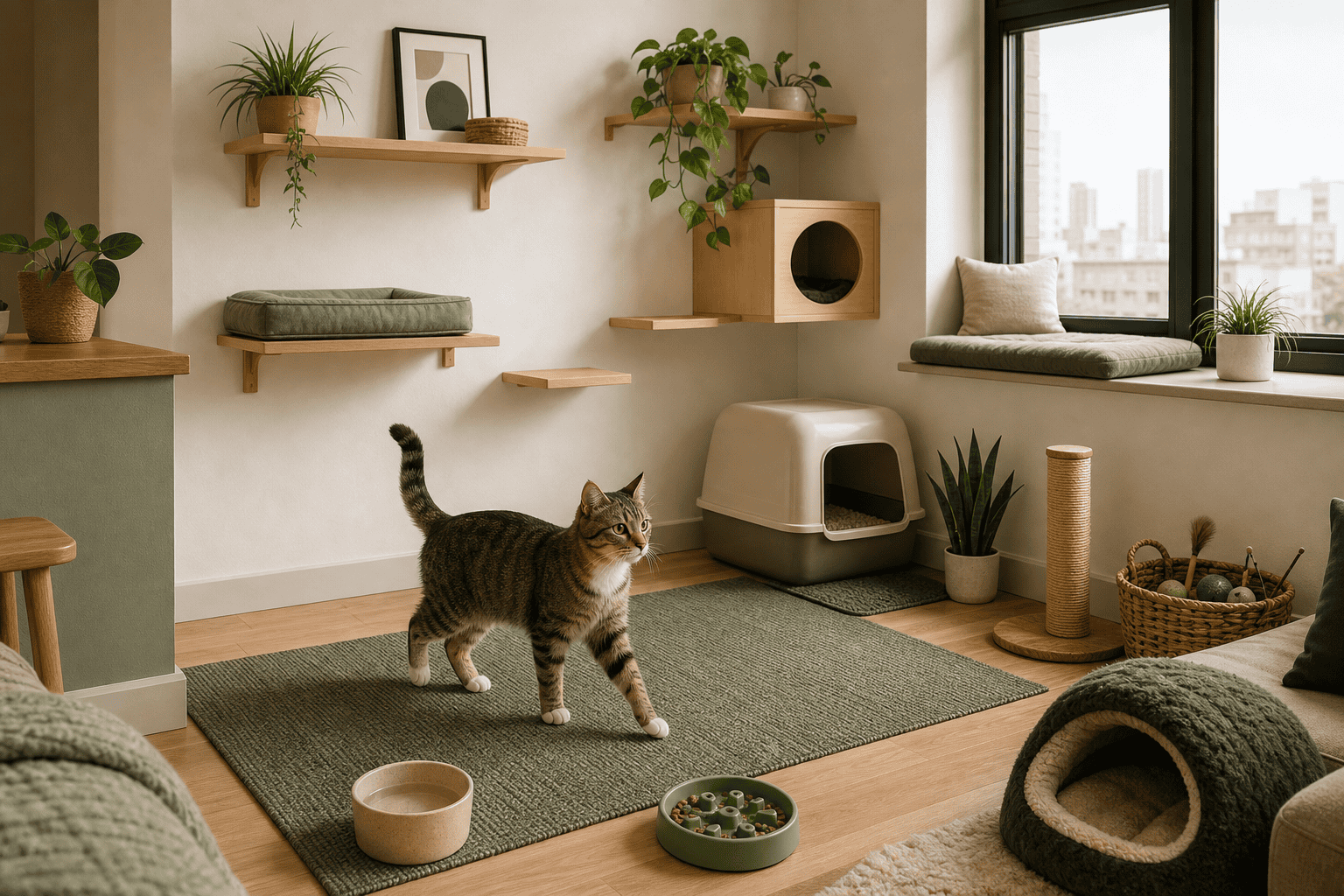
Small Apartment Cat Setup: 11 Renter-Friendly Ways to Keep Your Cat Happy

A small apartment can be a wonderful home for a cat. The trick is not more square footage. It is a smarter small apartment cat setup that gives your cat places to climb, scratch, hide, watch, eat, drink, and play without turning your home into an obstacle course.
Cats care about usable space. A studio with a sunny perch, a steady scratcher, a quiet litter box, and a few daily play rituals can feel richer than a larger home with nothing to do. This guide shows you how to build a renter-friendly setup that works for your cat and still looks like a grown-up apartment.
Why small apartments can work well for cats
Indoor cats need predictable resources and chances to express normal cat behavior. That means climbing, scratching, hiding, hunting through play, resting, and observing their territory. The Ohio State Indoor Pet Initiative describes key indoor cat needs such as safe resting places, scratching options, and separate resource areas. The AAFP and ISFM environmental needs guidelines also emphasize that a cat’s environment should support security, choice, play, and positive human interaction.
In other words, your apartment does not need to be huge. It needs to be legible to your cat. When each zone has a clear purpose, your cat can move through the day with less stress and more confidence.

1. Start with one dependable vertical route
Vertical space is the easiest way to make a small apartment feel bigger. Add one route that lets your cat go from floor level to a higher resting point. This can be a cat tree, a window perch, a sturdy bookcase, or renter-friendly wall shelves.
Keep the route simple. Your cat should be able to climb up and down without jumping across slippery surfaces. If your cat is older, use lower steps and soft landing points.
2. Give the window a job
A window perch is premium real estate. It gives your cat sunlight, scent changes, movement, and a daily “cat TV” routine. Choose a perch that fits securely, especially if you rent and cannot drill into trim or walls.
Safety comes first. Keep windows closed or use secure screens made to withstand pressure. A regular insect screen is not enough for a cat who lunges at birds or bugs.
3. Put scratching where your cat already stretches
Scratching is normal cat behavior. It helps cats stretch, mark territory, and maintain their claws. The Humane Society recommends placing scratchers where cats want to use them, not hidden in a back corner.
For a small apartment, use one tall vertical scratcher near the sofa or window route. Add a flat cardboard scratcher near a favorite nap spot. If your cat scratches furniture, use these renter-friendly cat-proofing ideas and move the scratcher closer to that exact place before slowly shifting it.
4. Separate food, water, and litter
Small homes make separation harder, but it matters. Cats often prefer water away from food and both away from the litter box. You do not need three different rooms. Even a few feet and a visual break can help.
- Place water in a quiet low-traffic spot.
- Keep food away from the litter area.
- Choose a litter box location that is private but easy to access.
- Avoid trapping the litter box behind loud appliances.
5. Make the litter box easy to use, not just easy to hide
A hidden litter box can look tidy, but your cat still has to like it. Choose an area with enough room to enter, turn, dig, and leave. If you use a litter cabinet, make sure it has ventilation and a wide opening.
In a studio, a bathroom corner, hallway nook, or low-traffic closet with the door permanently secured open may work. Clean daily. In small spaces, odor builds quickly, and cats notice before people do.
6. Create one quiet hiding place
Every apartment cat needs a place to disappear. A covered bed, a soft carrier left open, a cube on a shelf, or a blanket-lined box can all work. This spot is especially useful during deliveries, guests, storms, or vacuuming.
Do not drag your cat out of the hiding place unless there is a true safety issue. The hiding spot works because your cat controls it.
7. Use puzzle feeders to add “hunt” time
Apartment cats can get bored when food appears in the same bowl at the same time every day. Puzzle feeders add a small challenge and slow down fast eaters. Start easy. A few pieces of kibble in a shallow puzzle or treat mat is enough for the first session.
You can also hide a few treats around the room before you leave. Keep it simple, and avoid placing food near plants, cords, or breakable objects.
8. Rotate toys instead of buying more
Too many toys on the floor become background clutter. Keep three or four toys out and store the rest. Rotate them every few days so they feel new again.
Interactive wand play is still the gold standard for many cats. Aim for short sessions that end with a catch and a small snack. That pattern feels more like a real hunt.
9. Protect your lease with removable upgrades
Renters can still catify a home. Look for tension-mounted cat trees, furniture-style scratchers, window perches with secure supports, washable rugs, and removable shelf systems rated for your cat’s weight.
Before installing anything adhesive or wall-mounted, check your lease. If you do add shelves, use proper anchors and keep the path stable. A wobbly shelf teaches a cat not to trust it.
10. Keep plant choices cat-safe
Plants make a small apartment feel alive, but some common houseplants are dangerous for cats. Lilies are especially hazardous and should not be in a cat home. Check plant safety before bringing anything inside, and place tempting plants out of reach.
If your cat chews greenery, offer cat grass in a stable pot and keep decorative plants higher or in a closed room.
11. Build a daily routine your cat can predict
The best small apartment cat setup is not only furniture. It is rhythm. Feed around consistent times, scoop the litter box daily, play before meals when you can, and give your cat calm attention without forcing it.
Predictability helps many cats feel secure. Once the basics are steady, your apartment starts to feel like territory instead of a waiting room.
Small apartment cat setup checklist
- One secure vertical route.
- One sunny window perch or viewing spot.
- At least one tall scratcher and one flat scratcher.
- A quiet litter box with easy access.
- Food, water, and litter separated as much as possible.
- One hiding place your cat controls.
- A small toy rotation system.
- A puzzle feeder or treat-hunting routine.
- Cat-safe plants and protected cords.
- Washable rugs or mats under high-use zones.
FAQ
How much space does an apartment cat need?
There is no single number that works for every cat. A cat needs enough usable space for resting, litter, food, water, scratching, play, and movement. Vertical space and clear zones can make a small apartment much more comfortable.
Where should I put a litter box in a studio apartment?
Choose a quiet, accessible spot away from food and water. Bathrooms, hallway corners, and ventilated furniture-style enclosures can work. Avoid tight spaces where your cat may feel trapped.
Do cats need a cat tree in a small apartment?
Not always, but they do need vertical options. A cat tree is one easy solution. Shelves, a sturdy bookcase, or a secure window perch can also provide height.
How do I keep my cat entertained while I am at work?
Use a window perch, rotate toys, leave a simple puzzle feeder, and add a safe hiding spot. Before you leave, give your cat a short play session if possible.
The bottom line
Your apartment does not have to be big to be cat-friendly. Give your cat height, scratchable surfaces, quiet resources, and a predictable daily routine. With the right small apartment cat setup, even a compact city home can feel rich, safe, and interesting to the cat who lives there.


Leave a Reply