How to Keep Indoor Cats Entertained in Small Apartments
Introduction
Knowing how to keep indoor cats entertained is one of the biggest challenges for apartment cat owners. Small living spaces can limit exploration, exercise, and mental stimulation, which may eventually lead to boredom-related behaviors like nighttime zoomies, excessive meowing, scratching furniture, or attention-seeking habits.
The good news is that cats do not need a huge home to stay happy and mentally active. With the right environmental enrichment, climbing opportunities, play routines, and sensory stimulation, even small apartments can become engaging spaces that keep your cat entertained every day.
This guide explains why indoor cat entertainment matters and shares practical ways to keep apartment cats mentally stimulated and physically active. For more help, explore our cat enrichment guide, use the apartment cat territory mapper, and review the ASPCA cat care guide for general care basics.
How to keep your cat entertained in a small apartment
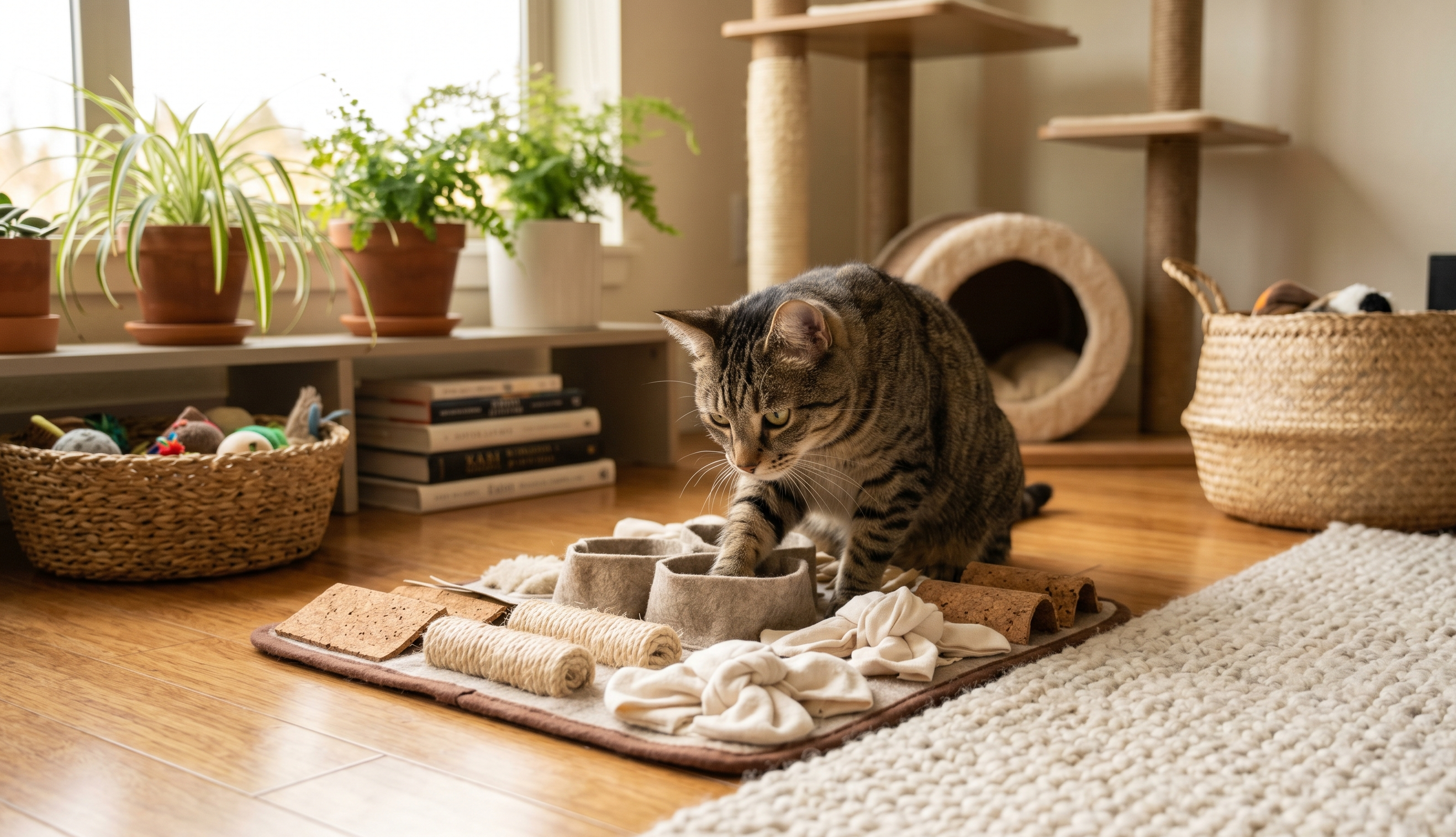
A cat entertained with climbing, hunting-style play, puzzle feeding, and window watching is less likely to demand attention at night. Start with one or two routines you can repeat daily, then rotate toys so your cat entertained plan stays fresh.

Why cat entertained routines matter indoors
Cats evolved as active hunters that spend much of their time exploring territory, observing movement, and responding to environmental changes. Indoor living removes many of these natural experiences.
In small apartments, the environment can quickly become repetitive because:
- Cats see the same spaces every day
- Movement opportunities are limited
- Environmental variety is reduced
- Daily stimulation may become predictable
Without enough engagement, cats may develop stress, frustration, or excess energy.
Common Signs of Boredom in Indoor Cats
A bored indoor cat may display behaviors such as:
- Excessive sleeping during the day
- Hyperactivity at night
- Overgrooming
- Scratching walls or furniture
- Chasing people constantly
- Increased vocalization
- Restlessness or pacing
These behaviors are often signs that a cat needs more physical or mental stimulation rather than punishment.

Key Factors That Keep Indoor Cats Mentally Engaged
1. Environmental Variety
Cats are naturally curious animals. Even small environmental changes can encourage exploration and mental activity.
Environmental variety may include:
- Different resting locations
- New observation points
- Rotating play areas
- Rearranged climbing paths
A changing environment prevents indoor life from feeling repetitive.
Why Variety Matters in Small Apartments
In larger homes, cats naturally experience more movement and sensory changes throughout the day. Small apartments compress activity into fewer rooms, making environmental enrichment even more important.
2. Opportunities for Climbing and Observation
Cats instinctively enjoy elevated areas because height increases security and visibility.
In small spaces, vertical territory can dramatically improve environmental complexity without requiring additional floor space.
Benefits of Cat Vertical Exploration
Climbing opportunities help indoor cats:
- Burn energy
- Observe surroundings safely
- Reduce boredom
- Increase confidence
- Expand usable territory
Even a compact apartment can feel larger to a cat when multiple vertical levels are available.

3. Interactive Play and Hunting Behaviors
Indoor cats still retain strong hunting instincts. Without healthy outlets, these instincts may appear as destructive or hyperactive behaviors.
Cats benefit from activities that mimic:
- Chasing
- Pouncing
- Stalking
- Tracking movement
- Problem-solving
Why Hunting Simulation Is Important
Short bursts of active play allow cats to release energy in natural ways. This often improves relaxation afterward and helps reduce nighttime activity.
Consistent play routines are especially important in apartments where spontaneous activity is limited.
4. Sensory Stimulation
Cats rely heavily on sight, sound, texture, and scent to understand their environment.
Indoor environments sometimes lack enough sensory variety, particularly in very small apartments.
Helpful Types of Sensory Enrichment
Indoor cats often benefit from:
- Watching outdoor movement
- Exploring different textures
- Listening to environmental sounds
- Discovering hidden spaces
- Investigating changing surroundings
Sensory engagement helps prevent mental stagnation.

5. Predictable Daily Routines
Cats generally feel safest when daily activities follow consistent patterns.
A stable routine helps indoor cats anticipate:
- Feeding times
- Play sessions
- Quiet hours
- Social interaction
Predictability can reduce anxiety and improve emotional balance in smaller homes.
How Small Apartments Affect Indoor Cat Behavior
Limited Space Can Increase Pent-Up Energy
Apartment cats often have fewer opportunities for movement throughout the day. This can lead to bursts of energy during early morning or nighttime hours.
Common signs include:
- Running through hallways
- Climbing unexpectedly
- Sudden zoomies
- Attention-seeking behaviors
Regular physical and mental engagement helps balance energy levels more naturally.

Indoor Cats Depend More on Human Interaction
In smaller living spaces, cats spend more time around their owners because there are fewer separate environments available.
This can increase:
- Social dependency
- Attention-seeking
- Sensitivity to schedules
- Behavioral changes when routines shift
Balanced interaction and independent enrichment both play important roles.
Repetitive Environments Reduce Curiosity
Cats naturally investigate environmental changes. When nothing changes for long periods, indoor environments may become less stimulating.
A lack of novelty can contribute to:
- Reduced activity
- Increased sleeping
- Lower engagement
- Frustration behaviors
Even small adjustments can reactivate curiosity and exploration.
Practical Ways to Keep Indoor Cats Entertained in Small Spaces
Create Multiple Observation Areas
Cats enjoy monitoring activity from safe positions.
Helpful observation areas may include:
- Window views
- Elevated corners
- Quiet shelves
- Sunny resting spots
Observation itself is mentally stimulating for many indoor cats.
Rotate Activities Regularly
Cats often respond more strongly to changing activities than constant repetition.
Rotating stimulation can include:
- Changing play schedules
- Rearranging exploration routes
- Introducing new hiding locations
- Alternating active and calm activities
Small changes help maintain novelty in compact environments.
Encourage Daily Movement
Physical activity supports both mental and emotional health.
Helpful movement opportunities include:
- Short interactive play sessions
- Vertical climbing routes
- Chasing activities
- Structured exercise periods
Apartment cats generally benefit from several shorter activity sessions throughout the day rather than one long session.

Support Quiet Recovery Time
Entertainment and stimulation are important, but cats also need uninterrupted rest.
Indoor cats should always have access to:
- Quiet sleeping areas
- Low-traffic zones
- Predictable retreat spaces
Balanced stimulation and recovery help prevent overstimulation.

Observe Individual Preferences
Not all cats enjoy the same types of enrichment.
Some cats prefer:
- Climbing and observation
- Fast-paced play
- Quiet exploration
- Human interaction
- Independent activities
Watching how a cat responds to different environments can help create a more effective entertainment routine.
FAQ
How do you keep indoor cats entertained in a small apartment?
Indoor cats can stay entertained through climbing areas, interactive play, sensory enrichment, rotating activities, and structured daily routines.
Do indoor cats get bored in apartments?
Yes. Indoor cats living in small apartments may experience boredom if they lack mental stimulation, environmental variety, or physical activity.
How often should I play with my indoor cat?
Most indoor cats benefit from several short interactive play sessions each day, especially in smaller living spaces.
What are signs of boredom in indoor cats?
Common signs include zoomies, excessive meowing, scratching furniture, overgrooming, pacing, and attention-seeking behavior.


Leave a Reply