Best Tips for Cat Litter Box Placement
Choosing the right litter box is only half the battle. Where you put it matters just as much — maybe more. Poor placement is one of the most common reasons cats start eliminating outside the box, a behavior that frustrates owners and stresses cats alike.
Whether you live in a studio apartment or a multi-story home, this guide covers everything you need to know about cat litter box placement: the rules that matter, the mistakes to avoid, and how to make it work in every type of space.
Why Litter Box Placement Matters More Than You Think
Cats are creatures of habit with strong instincts around elimination. In the wild, cats choose their bathroom spots based on safety, privacy, and distance from their sleeping and eating areas. Your domestic cat carries those same instincts.
When a litter box is placed in a loud, high-traffic, or hard-to-reach spot, your cat may simply decide to find a better location on their own — and that location is rarely where you want it.
Getting placement right from the start prevents litter box avoidance, reduces odor throughout your home, and keeps your cat calm and comfortable.
The Golden Rules of Litter Box Placement
1. Keep It Away From Food and Water
Never place a litter box next to your cat’s food bowl or water dish. Cats are instinctively averse to eliminating near where they eat — a survival behavior that keeps their food source clean. Even if your cat tolerates it at first, the proximity can lead to eating less, drinking less, or avoiding the litter box altogether.
Keep the litter box in a completely separate area of your home from feeding stations.
2. Choose a Quiet, Low-Traffic Location
Cats need to feel safe and undisturbed when using the litter box. High-traffic hallways, busy laundry rooms with running machines, or spots near frequently slammed doors can startle your cat mid-use — and teach them to associate the box with stress.
Good quiet-zone options include:
- A guest bathroom used infrequently
- A corner of a home office
- A dedicated space in a spare bedroom
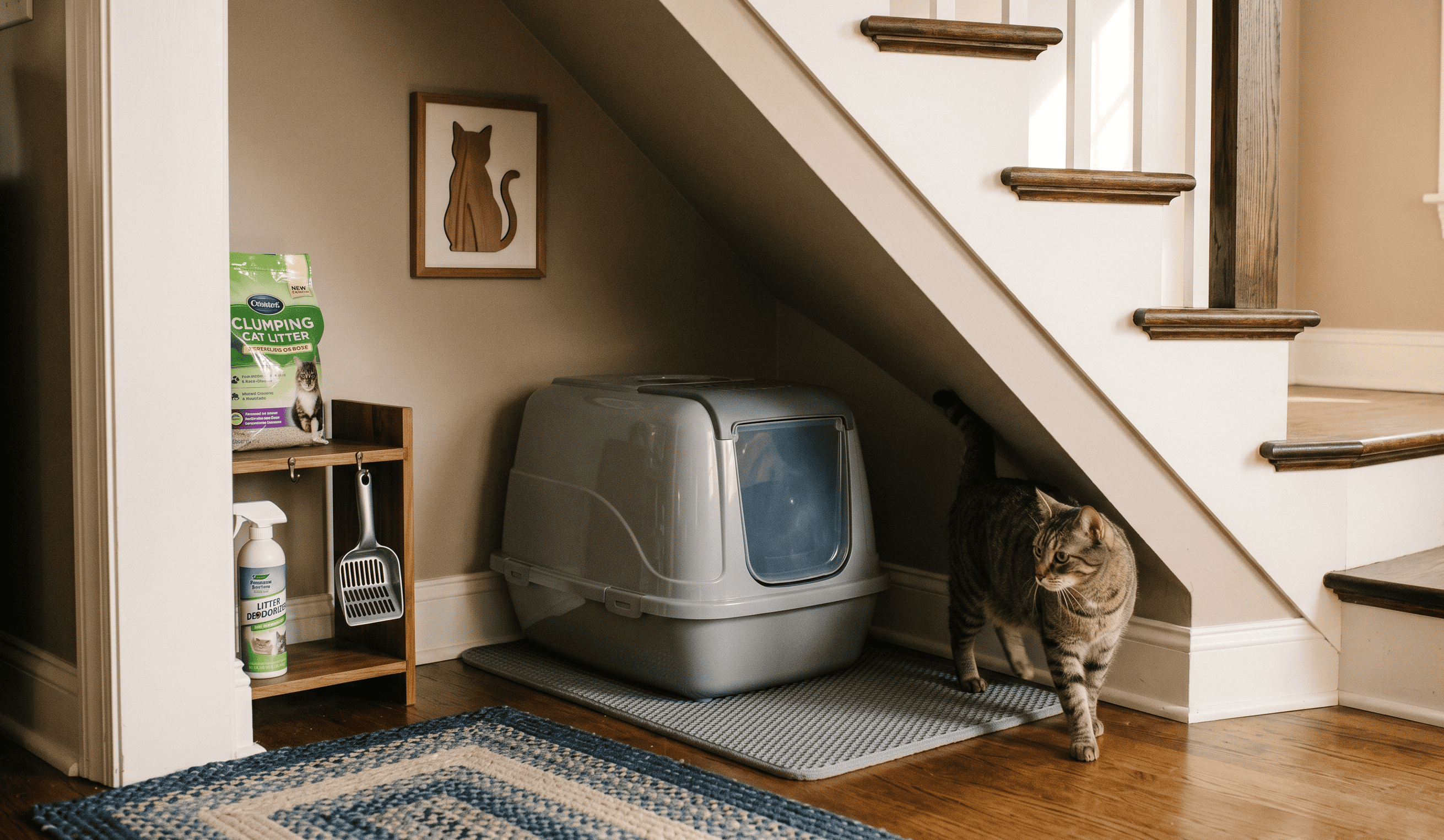
- Under a staircase
3. Make It Easily Accessible at All Times
Your cat should never have to work hard to reach the litter box. Avoid placing it behind closed doors, inside cabinets without a permanent opening, or in areas blocked by furniture. Cats that feel rushed, trapped, or blocked may start eliminating elsewhere.
For senior cats or kittens, this is especially important. Elderly cats with arthritis struggle with boxes at the bottom of steep staircases. Kittens may not make it in time if the box is too far away.
4. Provide One Litter Box Per Cat, Plus One Extra
The standard rule among veterinarians and feline behaviorists is one litter box per cat, plus one additional box. A household with two cats needs at least three litter boxes, placed in different locations throughout the home.
This rule prevents territorial tension — dominant cats can guard a single box and block access for more submissive housemates. Multiple boxes in different areas eliminate that problem entirely.
5. Spread Boxes Across Multiple Floors
In multi-story homes, place at least one litter box on every floor your cat uses. Relying on a single box in the basement for a cat that spends most of its day on the second floor is a recipe for accidents. Convenience matters, and so does the security of having options.
Best Rooms for a Litter Box
Bathroom
The bathroom is the most popular litter box location for good reason. It is designed for easy cleanup, has tiled or wipeable floors, and is typically low-traffic when not in use. A corner placement keeps the box out of the way while remaining fully accessible.
Tip: Leave the bathroom door slightly ajar or install a cat door so your cat always has access, even when the room is occupied.
Laundry Room
A laundry room can work well when machines are not running, but the noise and vibration of active cycles can startle cats. If this is your only option, train your cat to use the box during quiet times, or consider a furniture-style litter enclosure that provides extra sound dampening.
Tip: Avoid placing the box directly next to or behind the washing machine.

Home Office or Spare Bedroom
A spare bedroom or home office offers excellent privacy and quiet. These rooms tend to have consistent conditions and are rarely chaotic — ideal for cats who are sensitive to noise or activity.
Living Room (With the Right Enclosure)
Open-plan living does not have to mean sacrificing litter box placement. A furniture-style litter box cabinet can sit in a corner of the living room, blending with your decor while keeping the box accessible and odor contained. Guests rarely know what is inside.
Under the Stairs
The space under a staircase is often underused and makes a natural private alcove for a litter box. It is quiet, tucked away, and gives cats a sense of enclosure — something many cats naturally prefer.

Where NOT to Place a Litter Box
Knowing what to avoid is just as useful as knowing what works.
Avoid the garage. Cars, chemicals, and temperature extremes make garages inhospitable for cats and can deter box use.
Avoid near loud appliances. Furnaces, water heaters, and HVAC units produce sudden noises and vibrations that can frighten cats.
Avoid dark, cramped closets without adequate ventilation. Poor airflow concentrates odors and makes cats reluctant to enter.
Avoid placing multiple boxes side by side. Two boxes next to each other functionally count as one, because a cat guarding one can easily guard both. Spread boxes throughout the home.
Avoid high-foot-traffic areas. Hallways, entryways, and kitchen thoroughfares expose your cat to interruptions at the worst possible moment.
Litter Box Placement in Small Apartments
Small apartments present unique challenges, but workable solutions exist for every floor plan.
In a studio or one-bedroom, the bathroom is usually the best anchor point for the litter box. A corner-entry litter box enclosure fits neatly against a wall and takes up no more space than a small end table.
For truly tight spaces, look for enclosed litter furniture that doubles as functional decor — side tables, storage benches, and cabinet-style enclosures that hide the litter pan inside while offering usable surface area on top.
The key in small spaces is containment: a covered or enclosed litter box can help reduce the spread of litter particles and odor in a confined area. For cleaning, ventilation, and odor-control steps, see our litter and odor control guide.
How to Tell If Your Placement Is Wrong
Your cat will tell you when something is off — usually through behavior rather than words. Watch for these signs that placement needs adjusting:
- Eliminating just outside the box — the cat is trying to use it but something about the location is causing avoidance
- Sitting near the box without entering — possible anxiety about the location or surrounding environment
- Using an alternative spot in the home consistently — the alternative spot is likely quieter, more private, or more convenient
- Reluctance to approach the area — noise, smell, or past negative experiences near that location
If you notice any of these, try moving the box before assuming it is a medical or behavioral issue.
Tips for Maintaining Good Placement Long-Term
Finding the right spot is only the beginning. These habits keep placement working well over time:
Scoop daily. A dirty box in a good location is still a bad box. Cats that find their box soiled may use a different spot, even if the location was previously perfect.
Avoid moving the box suddenly. If you need to relocate the litter box, do it gradually — a few inches per day over several days — so your cat adjusts without confusion.
Reassess when your household changes. A new baby, a move, a new pet, or a renovation can disrupt your cat’s comfort with existing placement. Be willing to experiment when the environment shifts.
Consider your cat’s age. Aging cats need litter boxes with lower entry points placed on the floors where they spend the most time. What worked at age two may not work at age twelve.
Frequently Asked Questions
Q. How far should the litter box be from food and water? As far as practically possible — ideally in a completely separate room. The exact distance matters less than ensuring the cat cannot see, smell, or associate the two areas with each other.
Q. Can I put the litter box in a bedroom? Yes, particularly in a spare bedroom. Avoid placing it in your own bedroom if possible, since odor and nighttime sounds can disturb sleep. If it is the only option, an enclosed litter cabinet with odor control helps considerably.
Q. What is the best litter box placement for multiple cats? Spread boxes throughout the home across multiple floors and rooms. No two boxes should share the same tight space. Aim for the formula: one box per cat, plus one extra, distributed across separate locations.
Q. Should a litter box be in a corner? Corner placement is popular because it gives cats a sense of security — walls on two sides reduce the risk of being startled from behind. Most cats prefer it over exposed open-room placement.
Q. How do I hide a litter box without blocking my cat’s access? Use a furniture-style litter enclosure with a permanent entry opening on the side or front. These cabinets provide privacy and contain odor while remaining accessible around the clock — no doors to open, no barriers to navigate.
Q. What should I do if my cat stops using the litter box? First, rule out a medical cause by consulting your veterinarian. If health is not the issue, evaluate placement, cleanliness, and litter type. Try moving the box to the spot where the cat has been eliminating — that location is telling you something about what your cat prefers.
Final Thoughts
The best litter box placement is quiet, private, accessible, and well away from your cat’s food and water. It respects your cat’s natural instincts while fitting the reality of your home’s layout.
When placement is right, cats use their box reliably, odor stays contained, and the whole system disappears into the background of daily life — which is exactly how it should work.
Take a few minutes to evaluate where your current litter boxes are sitting. A small adjustment in location can make a significant difference for both you and your cat.
Looking for more guidance on creating the ideal environment for your cat? Browse our guides on [cat furniture for small spaces], [how to reduce litter box odor], and [the best litter hacks for indoor cats].


Leave a Reply